

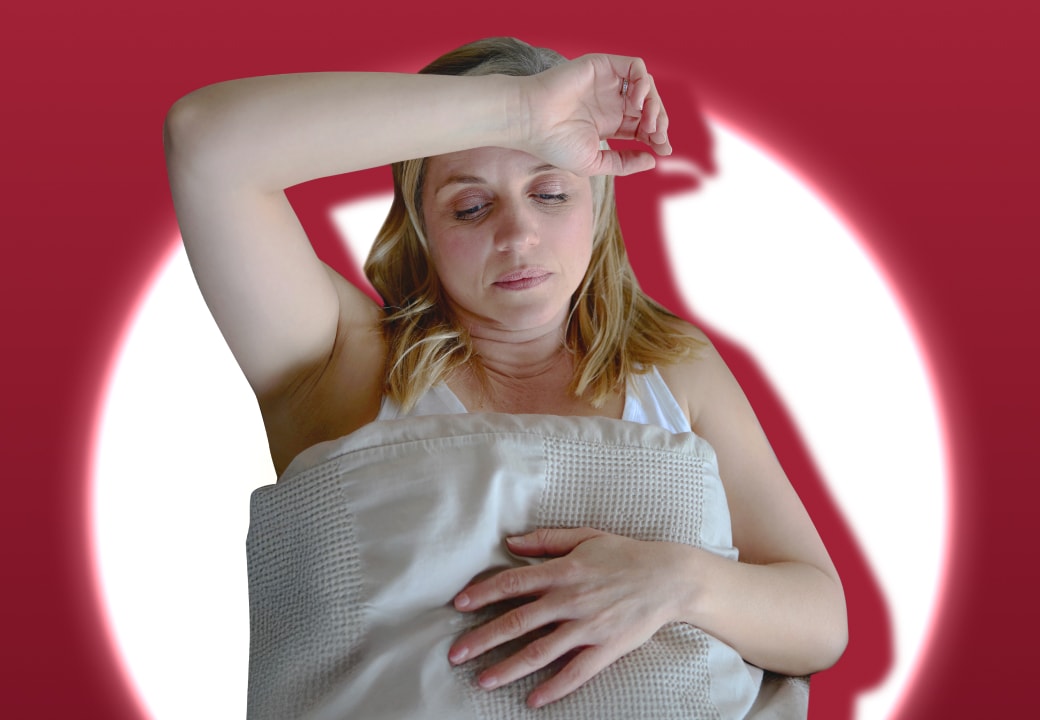


What are night sweats?

Night sweats are a sign of menopause, causing excessive sweating that can leave your clothes and bedding soaking wet – even if where you’re sleeping is cool.

Night sweats are one of the most common signs of menopause and are closely related to another sign you might have heard of: the hot flush.

When experiencing a hot flush, you will normally feel a sudden sensation of heat or warmth in your upper body, often accompanied by sweating, reddening of the skin and palpitations. This sensation typically lasts for up to four minutes (but can last for up to an hour) as it spreads across your body.

Night sweats are essentially the same as a hot flush – the only difference is that they happen when you’re asleep.

Known as ‘vasomotor symptoms’, hot flushes and night sweats are experienced by 70–80% of women during menopause.

What causes menopausal night sweats?

While scientists still don’t fully understand why night sweats (or hot flushes) happen, they’re thought to be brought on by fluctuations in the brain’s ability to regulate temperature – a direct result of declining oestrogen levels before, during and after menopause.

When you experience a hot flush at night, your body mistakenly thinks it’s overheating, even though it isn’t. This can trigger your skin’s blood vessels to open, which may then result in an intense sensation of heat and your body becoming hot and sweaty.

Since night sweats are just hot flushes you experience while asleep, you may not even realise you’re having them until you wake up.

However, if night sweats are disrupting your sleep or beginning to impact your work or social life, it’s important to speak to your doctor. 

Can night sweats occur during perimenopause?

There are no set rules when it comes to menopause – everyone experiences it differently. This means that it is perfectly possible to experience night sweats during perimenopause (the transition leading up to menopause), due to the changing levels of oestrogen in your body.

Perimenopausal signs, like night sweats, can occur during the transition into menopause, which all women experience at some point in their lives. While this normally happens between the ages of 45 and 55, it can occur earlier for some women and later for others.  

During perimenopause you may experience a wide range of signs, including mood swings, changes in your libido and – you guessed it – night sweats. 

Night sweats during menopause: management techniques

Living with night sweats can leave some people feeling uncomfortable and lacking in sleep. Fortunately, there are several things you can do to help alleviate your signs and get back to enjoying restful sleep.

For example, here are some great ideas to try:

  • Change your diet: What you eat can impact your likelihood of experiencing menopausal signs, like night sweats. For instance, try to avoid alcohol, spicy foods and caffeine.

  • Think about what you wear: The types of clothes you wear to bed can make a big difference to how hot you feel. So, it’s a good idea to avoid clothes made from synthetic fabrics and opt for loose cotton pyjamas instead.  

  • Keep your room cool: Since night sweats can make your body feel as if it’s overheating, it’s important to keep your bedroom cool. You can do this by opening a door or window, or using a fan. 

  • Reduce your stress levels: While eating healthily, exercising regularly and performing stress-relieving activities may not directly reduce night sweats, they may help you to feel better and manage your signs more effectively.

  • Give up smoking: If you smoke cigarettes, quitting may not only decrease your likelihood of experiencing hot flushes but also reduce your risk of heart disease, stroke and cancer.

Treatments for night sweats

While the strategies above can help you combat night sweats, there are also several treatments available to address these and other menopause signs you may be experiencing.

Hormone replacement therapy (HRT) is often the main form of treatment that doctors may prescribe to help alleviate the signs of menopause, including night sweats.

Available as tablets, skin patches, gels and sprays, HRT is highly effective and works by replacing the hormones that your body is no longer producing.

However, if HRT isn’t suitable for you, or you would prefer not to use it, speak to your doctor to explore other treatment options that may be available.

You deserve to feel supported through every stage. Explore more on the CanesMeno® hub if you’d like advice that fits your life.

Related Articles

Young woman with dark hair thinking about answer to Canesten thrush quiz

Thrush Trivia Quiz

Thrush is quite common, but how much do you know about it? Take our Thrush Trivia Quiz to test your knowledge on the causes of thrush and other candida symptoms. Share your results if you wish!

Take our Thrush Trivia Quiz
Happy young pregnant woman wearing yellow jumper and pointing to her tummy

Thrush in Pregnancy

Learn everything you need to know about having vaginal thrush during pregnancy. Find out how to prevent and treat a vaginal yeast infection. If you are pregnant and think you have a thrush, talk to your healthcare professional before using any product to treat the infection. Medicines can affect the unborn baby. Always talk to your doctor or pharmacist before taking any medicine in pregnancy.

LEARN MORE
Smiling young man in a grey jumper, happy after Canesten thrush treatment

Male thrush: causes and symptoms

Learn more about male thrush symptoms. Including how to reduce the risk of developing a yeast infection, prevention, and yeast infection treatments.

LEARN MORE
The Truth Undresses

Vagina. Vulva. Discharge.

Let’s take a look, and see all the big, dark, uneven, hairy, honest versions of normality.

By clicking this link you will leave the Canesten website and enter The Truth Undressed website.

FIND THE FACTS
Smiling young woman with red hair, wearing a green shirt, happy after Canesten bacterial vaginosis treatment

What is Bacterial Vaginosis (BV)?

Learn what bacterial vaginosis (BV) is from BV symptoms to how to prevent BV, and how to treat it. Find out what the differences between thrush and BV are today.

LEARN MORE
Smiling young woman with dark hair, wearing a red shirt, happy after Canesten cystitis treatment

What is Cystitis?

Learn what cystitis is such as what the symptoms and causes of this urinary tract infection (UTI) are. You can also find out about how to treat and prevent cystitis here.

LEARN MORE
Active young woman wearing tank top, standing in empowered pose against a sunny backdrop

Vaginal infections: what you need to know

Learn how to identify the symptoms and causes of vaginal infections such as bacterial vaginosis (BV). Discover our tips on how to improve your vaginal health here.

LEARN MORE